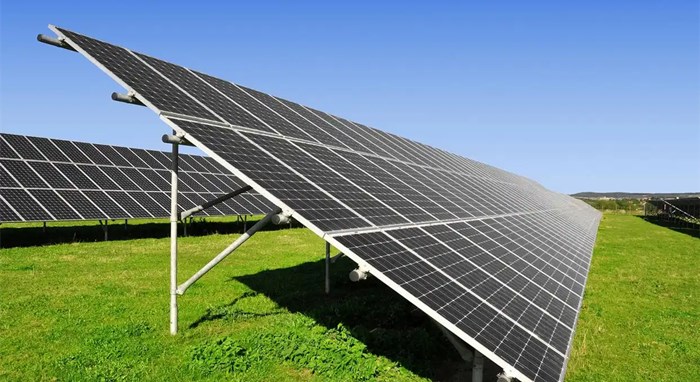
Solar cell module composition and functions of each part:
1. Tempered glass, its role is to protect the power generation body (such as cells), and its selection has requirements for light transmission:
The light transmittance must be high (generally above 91%);
Ultra-white tempering treatment.
2. EVA is used to bond and fix tempered glass and power generation body (such as cells). The quality of transparent EVA material directly affects the life of the module. EVA exposed to the air is prone to aging and yellowing, which affects the light transmittance of the module, thereby affecting the power generation quality of the module. In addition to the quality of EVA itself, the lamination process of the module manufacturer is also very influential. For example, if the EVA bonding degree does not meet the standard, the bonding strength of EVA with tempered glass and backboard is not enough, it will cause EVA to age prematurely and affect the life of the module. Mainly bond and encapsulate the power generation body and the backboard.
3. The main function of the cell is to generate electricity. The mainstream of the power generation body market is crystalline silicon solar cells and thin-film solar cells, both of which have their own advantages and disadvantages. Crystalline silicon solar cells have relatively low equipment costs and high photoelectric conversion efficiency. They are more suitable for generating electricity in outdoor sunlight, but the consumption and cell costs are very high; thin-film solar cells have very low consumption and battery costs, and have very good weak light effects. They can also generate electricity under ordinary lights, but the relatively high equipment costs and the photoelectric conversion efficiency are more than half of that of crystalline silicon cells, such as the solar cells on the calculator.
4. Backplane function, sealing, insulation, waterproofing (generally TPT, TPE and other materials must be resistant to aging, most component manufacturers have a 25-year warranty, tempered glass, aluminum alloy generally have no problem, the key lies in whether the backplane and silicone can meet the requirements.)
5. Aluminum alloy protective laminates play a certain sealing and supporting role.
6. The junction box protects the entire power generation system and acts as a current transfer station. If the component is short-circuited, the junction box automatically disconnects the short-circuited battery string to prevent the entire system from burning out. The most critical thing in the junction box is the selection of diodes. Depending on the type of battery in the component, the corresponding diodes are also different.
7. Silicone sealing function, used to seal the junction between the component and the aluminum alloy frame, and the component and the junction box. Some companies use double-sided tape and foam to replace silicone. Silicone is widely used in China. The process is simple, convenient, easy to operate, and the cost is very low.
Current status of solar module industry:
Solar cells are mainly based on semiconductor materials. Their working principle is to use photovoltaic materials to absorb light energy and then produce photovoltaic reactions. According to the different materials used, solar cells can be divided into:
1. Silicon solar cells.
2. Batteries made of inorganic salts such as gallium arsenide III-V compounds, cadmium sulfide, copper indium selenide and other multi-compounds.
3. Solar cells made of functional polymer materials.
4. Nanocrystalline solar cells, etc.